Two weeks of knitting, a beautifully worked yoke, and the finished sweater fits a teddy bear. Almost every knitter has a version of that story, and it usually starts the same way: a swatch was skipped, or knit quickly and glanced at once. Gauge is the number that decides whether all those hours become something you actually wear. Knitting a proper swatch takes an evening. Ignoring it can cost you a month.
What Gauge Really Measures
Gauge is how many stitches and rows fit into a set distance, usually 4 inches or 10 cm. A pattern might say 20 stitches and 28 rows over 4 inches in stockinette. That works out to 5 stitches per inch. If your hands produce 22 stitches over the same 4 inches, you're knitting at 5.5 stitches per inch, and every stitch you make is slightly narrower than the designer's.
The difference sounds tiny. It isn't. A 44-inch sweater at 5 stitches per inch needs 220 stitches around. Knit those same 220 stitches at 5.5 per inch and the body measures 40 inches. Four inches of ease, gone. That's the difference between a sweater that skims and one that strains across the shoulders.
Knit a Swatch Bigger Than You Think
Small swatches lie. Edge stitches curl, cast-on rows sit tight, and a 2-inch square gives you nothing to measure without counting partial stitches at both ends. Aim for a swatch at least 6 inches square, and 8 inches if you have the patience. It costs one evening and a few grams of yarn.
- Do the math first. Take the pattern's stitch gauge per inch, multiply by 8, then add 6 or so edge stitches so the middle stays flat and honest.
- Knit the stitch pattern you'll actually knit. Stockinette for a stockinette sweater. If the body is cabled or textured, swatch the cable panel itself, because cables pull the fabric in.
- Swatch in the round if the project is in the round. Flat stockinette and circular stockinette are different fabrics. Most knitters purl at a different tension than they knit, so a flat swatch can read looser or tighter than the tube you'll actually make. Knit a small tube and leave long floats across the back, then measure the front.
- Use the same needles you'll use for the sweater. Not the set you swatch with and never knit with.
- Work a couple of inches before you start caring. The first rows are not representative of the fabric.
Wash the Swatch the Way You'll Wash the Sweater
An unwashed swatch is a rough draft. Yarn changes on first contact with water: wool blooms and fills in, cotton relaxes and drops, superwash treated yarns often grow. A swatch that measures 5 stitches per inch off the needles can settle at 4.75 after a bath — which, across a 40-inch chest, is more than two inches of extra fabric.
So wash it. Same soap, same water temperature, same handling you plan for the finished piece. If you'll lay the sweater flat to dry, lay the swatch flat and pat it into shape. If it's a lace shawl you'll pin out, pin the swatch. Then let it dry completely, overnight if you can. Damp wool measures larger than dry wool, and measuring early is one of the easiest ways to fool yourself.
Write down the gauge before washing and after washing. Label the swatch with the yarn, the needle size, and the date. This takes ninety seconds and saves you a year from now when you're standing in a yarn shop trying to remember what needle you used.
How to Measure Without Cheating
Measuring is where most gauge errors actually happen. Follow the same steps every time:
- Lay the dry swatch flat on a smooth, hard surface. Don't pin it out unless you pin your finished sweaters out too.
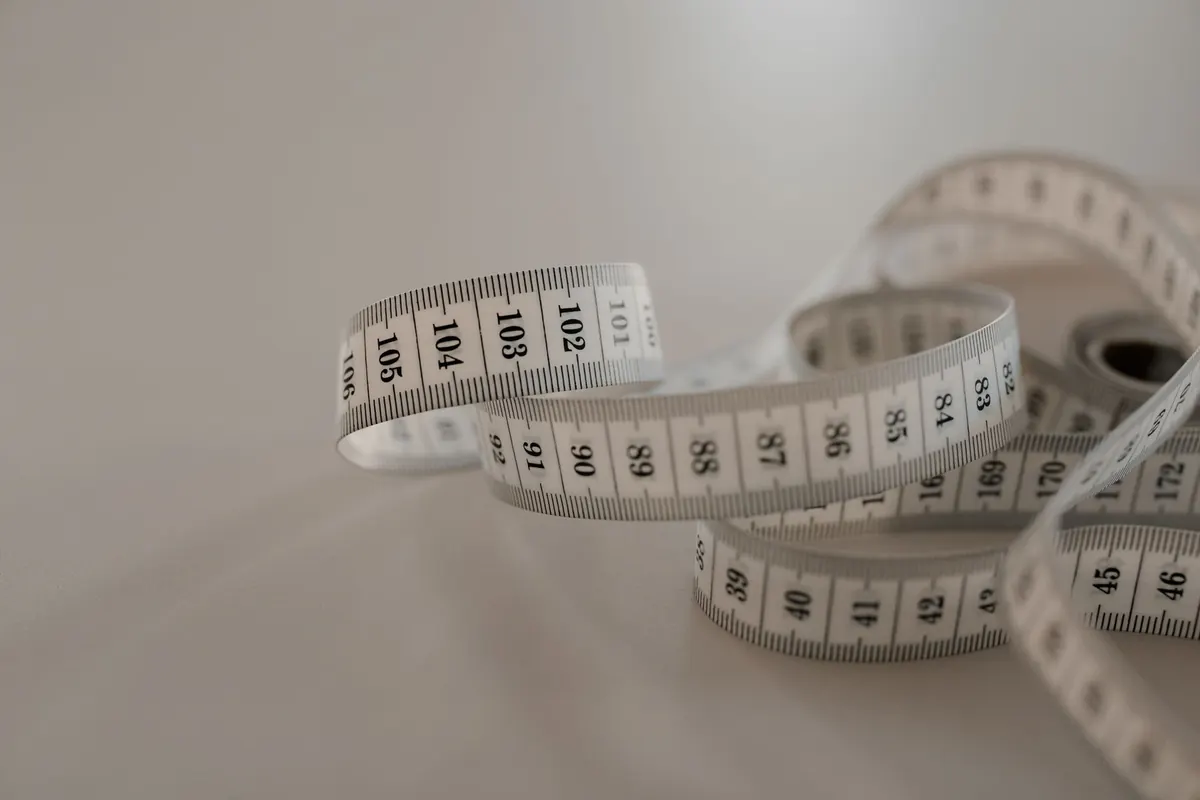
- Use a rigid ruler or a gauge window, not a soft tape measure. Soft tapes stretch, and they wobble.
- Mark 4 inches with two pins placed inside the fabric, well away from the edges.
- Count the stitches between the pins, including a half stitch if one falls at the mark. Don't round in your own favor.
- Repeat in two or three places across the swatch and average the results. Fabric varies, especially near edges and seam lines.
- Turn the ruler sideways and measure row gauge the same way.
Ignore the outer inch on every side. Curled stockinette edges sit at a different tension, and cast-on and bind-off rows are their own creatures. The middle of the swatch is the only part that behaves like the middle of a sweater.
Adjusting Needle Size in the Right Direction
The logic is simple once you stop second-guessing it. Too many stitches per inch means your stitches are too small and your fabric is too dense. Go up a needle size. Too few stitches per inch means your stitches are too large. Go down a needle size.
Change one size at a time and knit a fresh swatch. A single needle size typically shifts gauge by a few percent — sometimes exactly what you need, sometimes not quite enough. If you're two sizes off, two swatches is a fair price. And if you find yourself needing a dramatically different needle than the label suggests, that's normal. Tension is personal. The pattern's recommended needle is a suggestion, not a rule.
Match stitch gauge first. Stitch gauge controls width, and width is hard to fix later. Row gauge controls length, which is easy to adjust by knitting to a measurement instead of a row count. The exception is raglan and circular yoke sweaters, where the shaping depends on rows as much as stitches. If row gauge is far off on one of those, read the pattern's shaping notes carefully, or choose a size based on your row gauge.
Match the stitch count first. Length is easy to add or subtract. Width is a headache you'll feel every time you put the sweater on.
When Your Gauge Still Won't Match
Sometimes the yarn and the pattern simply disagree. You've swatched on three needle sizes and none of them produce the fabric you want at the gauge the pattern wants. You have options.
Knit a different size. If your gauge runs tight, the next size up may land exactly at your measurements. Compare your stitches per inch against the pattern's finished measurements rather than its size labels, which are often written for a different gauge entirely.
Recalculate the pattern. On simple shapes — a plain stockinette sweater, a drop-shoulder pullover, a scarf — you can cast on according to your own gauge and adjust the numbers as you go. On complex shaping, that's a real design project, not a tweak.
Change the yarn. If you love the pattern, find a yarn that behaves. If you love the yarn, find a pattern that suits its gauge. Forcing a mismatch rarely ends well, and the frogging costs more than the swatching would have.
Keep the Swatch When You're Done
Don't unravel it. Sew a small tag to the corner with the yarn name, needle size, and both gauges. Toss it in a bag with the leftover yarn. Years later, when a moth finds your sweater or an elbow wears thin, that swatch is the exact fabric you need for an invisible darn — same yarn, same dye lot, same gauge.
After a few projects you'll have a small library of swatches. It tells you something useful about yourself: which needle size you tend to need with a worsted wool, how much your gauge shifts between summer and winter, whether you knit tighter when you're tired. That's knowledge no pattern can hand you.
The First Few Hours of the Project
Think of the swatch as the beginning of the sweater, not a chore that stands between you and the beginning. Cast it on when you buy the yarn. Wash it while you plan the first sleeve. Measure it twice, once right after it dries and once the next morning, and trust the average.
Then cast on the real thing with numbers you believe in, and knit without that low hum of worry in the background. Ten minutes of measuring is a small price for a sweater that fits.
Photo: Ron Lach / Pexels